
Investor pitch decks
Pitch decks from real companies raising money, chosen because they are well made. Each entry links to the original deck.
Theranos, Inc. pitch deck, June 1, 2006 investor presentation
The deck opens with a title slide, "A Presentation For Investors," dated June 1, 2006.

Anthropic pitch deck, 2023
The deck opens with a title slide naming Anthropic, PBC and co-founder and President Daniela Amodei, then an introduction that describes the company as an AI safety and research company, a Public Benefit Corporation based in San Francisco.

Dwolla pitch deck, 2013
The deck opens with a title slide and a one-line solution statement: Dwolla lets anything connected to the internet move money quickly, safely and cheaply.
Crew (as ooomf) pitch deck
The deck opens with the title slide and the line "Average is over," then introduces ooomf as a premium marketplace of mobile and web talent where the talent picks the work.
Contently pitch deck, 2013
The deck opens with a Series B financing title slide and then frames the market with a 2013 claim that content marketing is brands' top digital priority, followed by a survey chart showing creating original content as the leading challenge for marketers.

BuzzFeed pitch deck, 2008
The deck opens with a title slide and a 'Where We Are' snapshot listing traffic, a two-editor content model, a patent-pending core technology and monthly burn.

Tinder pitch deck
The deck opens with a title slide for Match Box, a flirting game, then tells the story of Matt, who sees someone he likes at a party but does not approach her because he fears rejection.

Moz (as SEOmoz) pitch deck, 2011
The deck opens on a title slide naming Rand Fishkin as CEO and co-founder and setting the goal of becoming Seattle's next $1 billion company.
Front pitch deck, 2016
The deck opens with a title slide and a problem statement: business communication still runs on email built for personal use, with a stated 215 billion business emails sent per day.

Mattermark pitch deck, 2014
The deck opens with a title and a one-line mission to organize the world's business information, then frames the problem: professionals lack a reliable way to ask business questions and get data-backed answers.

Buffer pitch deck, 2012
The deck opens with two quotes framing social sharing as the most important trend in marketing, then asks how social can drive traffic.
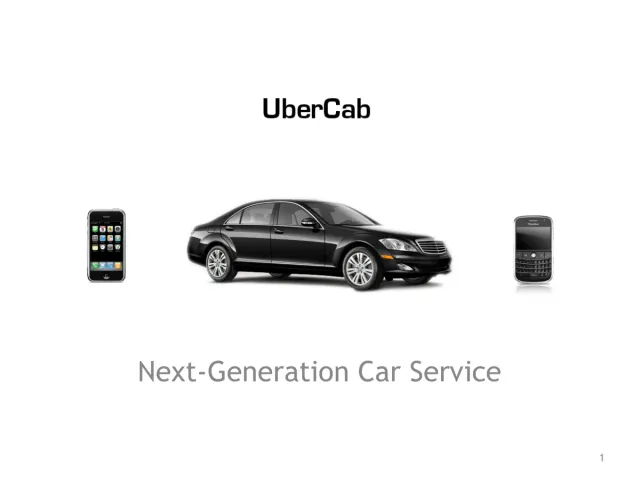
Uber (as UberCab) pitch deck, 2008
The deck opens by framing the state of San Francisco and New York taxi service in 2008, citing aging dispatch technology, fuel-inefficient vehicles and the medallion system as the problem.

